

Debt collection has always been a volume problem. The accounts that need follow-up grow faster than the teams assigned to reach them. And the further a customer moves past their due date without a meaningful conversation, the harder recovery becomes.
Most collection operations today still rely on human agents working through call lists, one account at a time, during fixed working hours, with inconsistent results. The model hasn't changed much in decades, even as the volume and complexity of retail credit in India has grown substantially.
AI voice agents are starting to change how this works. Not by replacing the intent behind collections which is ultimately about helping customers resolve obligations but by changing the mechanics of how that outreach happens.
Where Traditional Collection Models Run Into Limits
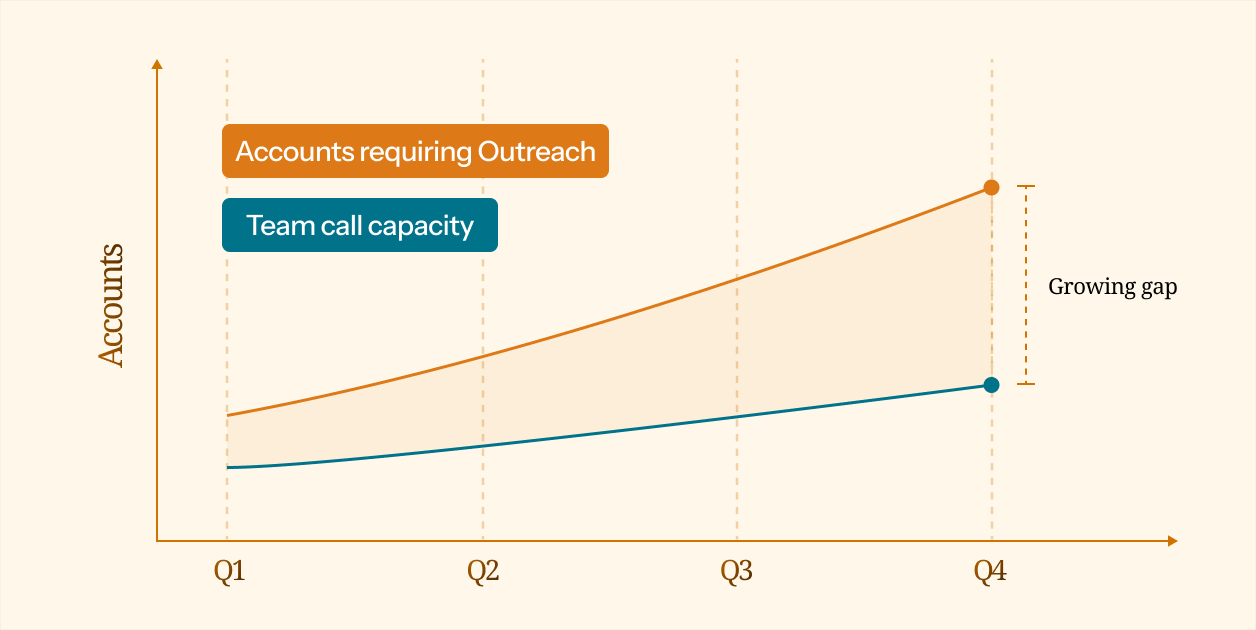
The challenges in conventional collections aren't new, but they compound as portfolios grow:
- Agents can only work a fixed number of hours each day, which limits how many accounts can be contacted
- Call quality and tone vary between agents, which affects customer experience and recovery outcomes
- First-contact resolution is difficult when agents lack real-time account context
- Early-stage delinquency — where proactive outreach matters most — often gets less attention because resources are stretched across all buckets
None of these are problems of effort or intent. They're structural constraints that don't resolve with more training or larger teams. They require a different approach to the outreach itself.
The gap between the number of accounts that need outreach and the capacity available to reach them doesn't shrink over time.
It tends to widen especially during high-disbursement periods when delinquency naturally increases.
What AI Voice Agents Do Differently
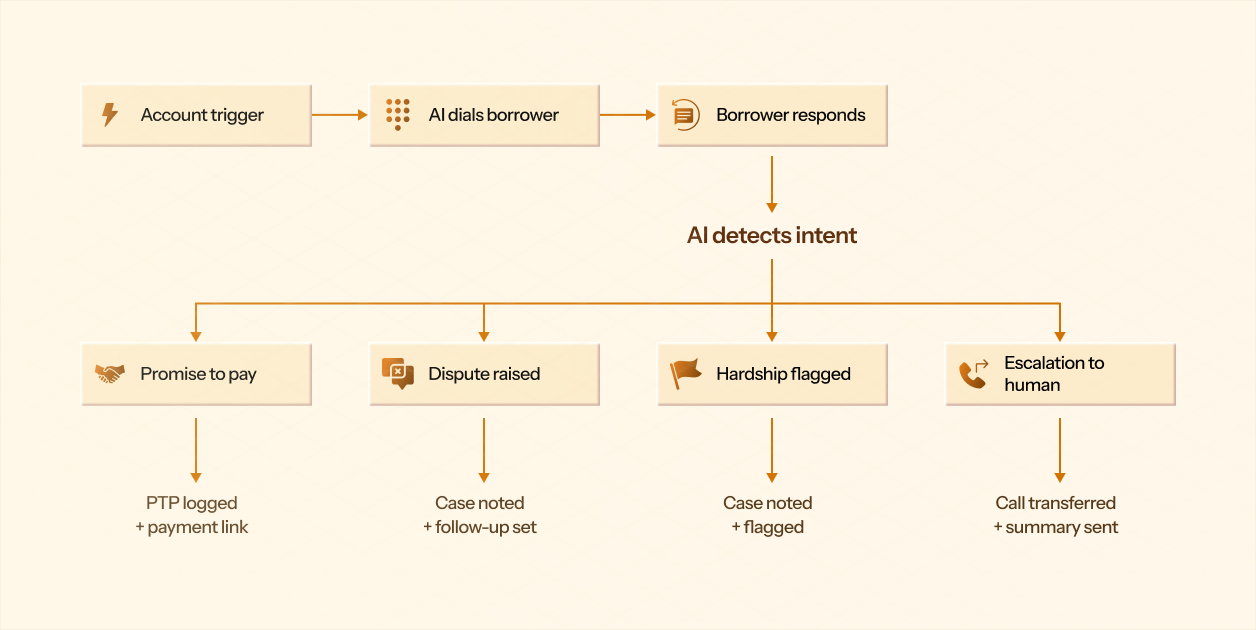
An AI voice agent conducts live, spoken conversations with borrowers, not IVR prompts, not pre-recorded messages. It can identify the account, explain the purpose of the call, listen to the borrower's response, and continue the conversation based on what it hears.
This matters for collections specifically because recovery conversations aren't linear. A borrower might say they'll pay next week. They might ask for a settlement. They might explain a change in circumstances. An AI agent trained for collections can handle each of these paths and route to a human agent when the conversation requires it.
What also changes is scale and consistency. The same conversation with the same tone, the same disclosures, the same documented outcome can happen across thousands of accounts simultaneously. Early-stage delinquency, which is often underserved in manual operations, can be addressed as systematically as late-stage recovery.
Where This Applies in Practice
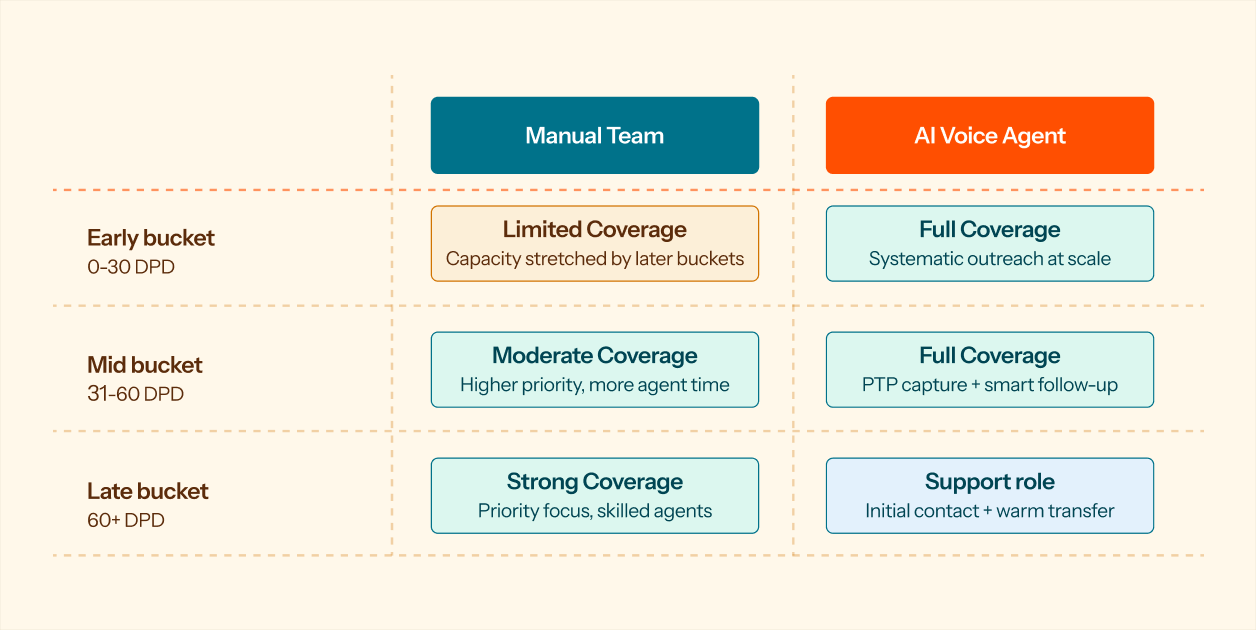
The use cases where AI voice agents add clear value in collections include:
Human agents remain essential for complex negotiations, high-value accounts, and situations that require judgment. The shift AI enables is freeing those agents for conversations where their expertise actually matters.
What Changes for the Collections Team
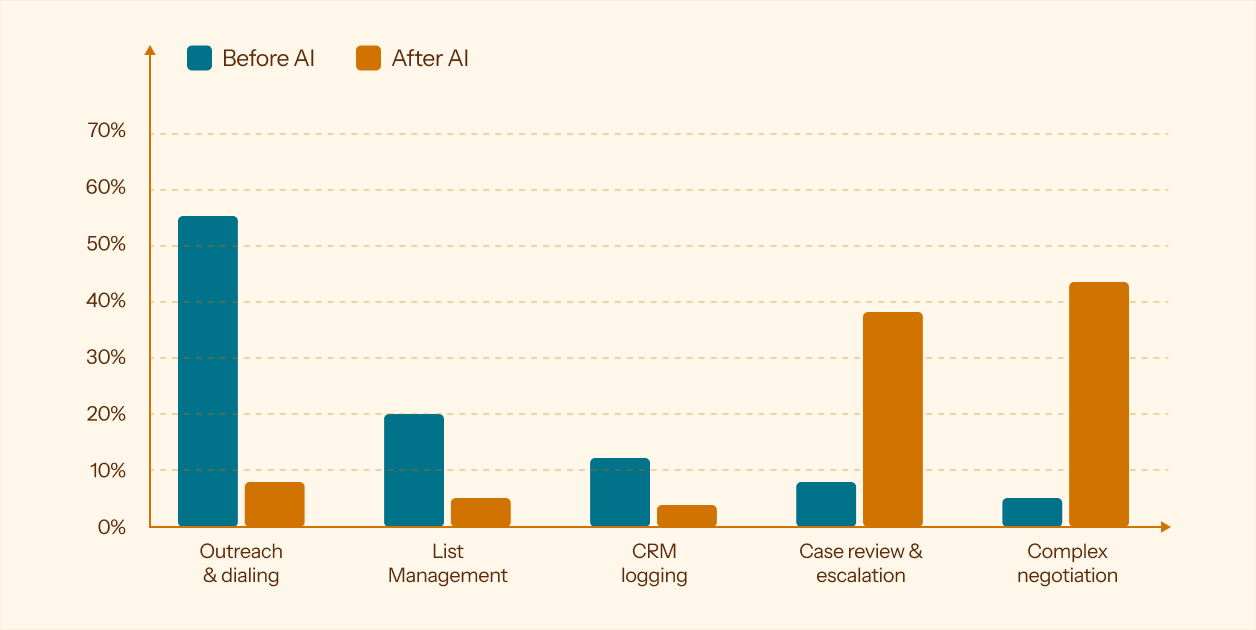
Operations teams that deploy AI voice agents typically describe a similar shift: the team stops spending most of its time on outreach and starts spending more time on outcomes.
Instead of managing who gets called today, supervisors are reviewing which accounts escalated, what commitments were made, and where follow-through is needed. The work becomes more analytical and less transactional.
For compliance teams, full call transcription and automatic documentation of every interaction provides an audit trail that manual operations struggle to produce consistently.
A Note on the Customer Experience
There is a reasonable concern about whether borrowers will respond to AI-led collection calls. The evidence from deployments suggests that many customers prefer it particularly for early-stage reminders, where the interaction is straightforward and the customer simply needs to be informed or reminded.
Customers in more complex situations like disputing a charge, explaining financial hardship, negotiating terms benefit from a human conversation. A well-designed AI collection workflow identifies these cases early and routes them accordingly.
The result isn't a worse experience for the customer. In many cases it's more consistent, faster, and less likely to occur at inconvenient times or with the wrong tone.
Conclusion
The structural limits of manual collection operations are well understood. The question for most BFSI teams is no longer whether to automate some portion of outreach, it's how to do it in a way that is compliant, effective, and aligned with the customer relationships they're trying to maintain.
AI voice agents built specifically for the collections context offer a way to close the gap between the volume of accounts that need contact and the capacity available to reach them without compromising on the quality or integrity of those conversations.