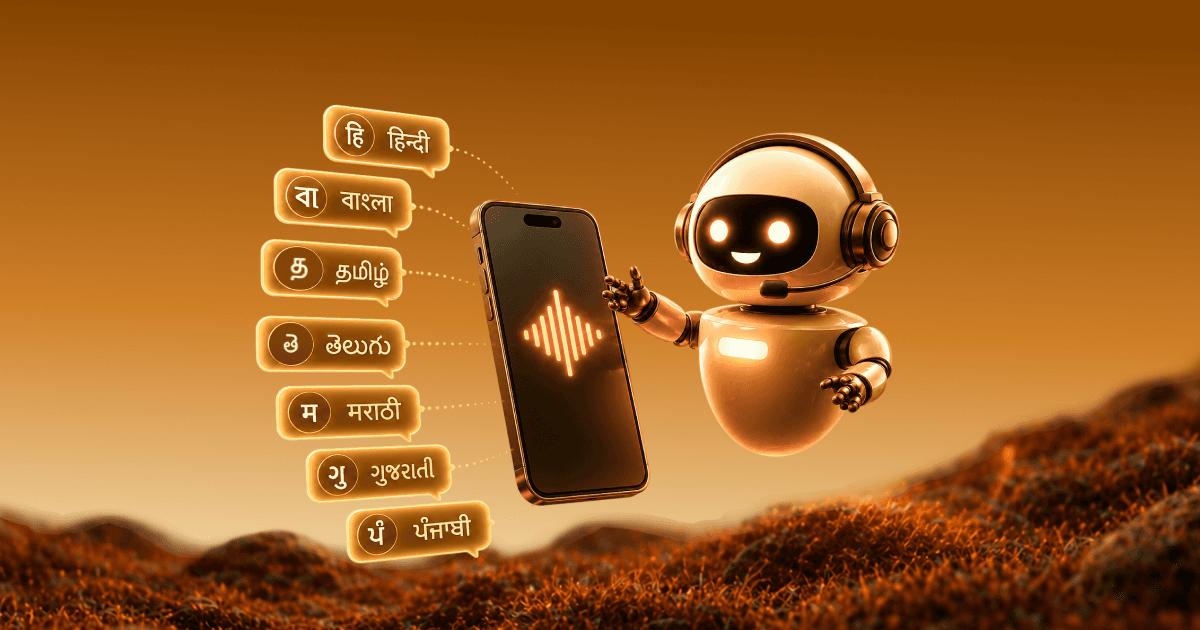

Term insurance is the simplest financial safety net an Indian family can have. It's affordable. It's straightforward. The need for it is universal.
And yet most families don't have it.
Awareness campaigns have been running for years. The problem isn't that people haven't heard of term insurance. The problem is the gap between "I should look into this" and "I have actually bought a policy." That gap is full of friction. And most insurers have no systematic way to close it.
Where Customers Are Dropping Off
The drop-off isn't random. It happens at the same predictable friction points, every time.
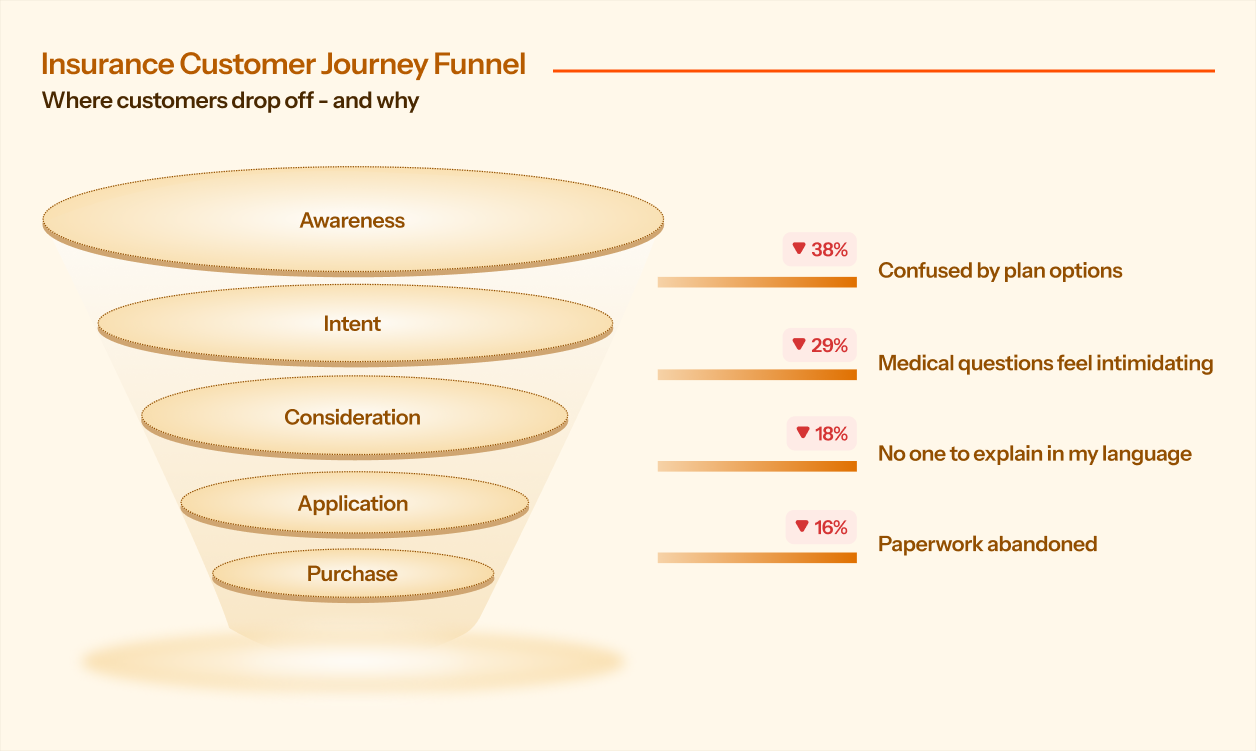
The Five Friction Points Killing Term Conversions
1. Plan comparison paralysis
Customers comparing term plans online see premium amounts but can't meaningfully evaluate claim settlement ratios, exclusion clauses, or rider options without guidance. Most don't get that guidance. Most drop off.
2. Medical declaration anxiety
Underwriting questions about pre-existing conditions and family history make first-time buyers nervous. Without someone to explain what the insurer is actually asking and why, a significant number abandon the application mid-way.
3. Language of the form, not the customer
Most term insurance documentation, online and offline, is in English or formal Hindi. A customer in Coimbatore or Bhubaneswar trying to buy in their language hits a wall.
4. No follow-up at the right moment
A customer who expressed interest on a Tuesday and didn't complete the purchase needs a follow-up at the right time, not a batch SMS on Monday morning. Most insurers can't deliver that precision at scale.
5. The paperwork drop
Even motivated customers abandon at the document upload stage. Without guidance on exactly what's needed and why, the process feels heavier than it is.
What AI Voice Agents Change About This Journey
AI voice agents don't replace the advisor in a term insurance sale. They do something the advisor network has never been able to do at scale: ensure that every customer who expressed interest actually gets a clear, patient, multilingual conversation that walks them through each friction point.
In the customer's language. Not the call center's.
At the right moment. Not in a batch follow-up queue.
With context from their previous interaction. Not starting from scratch.
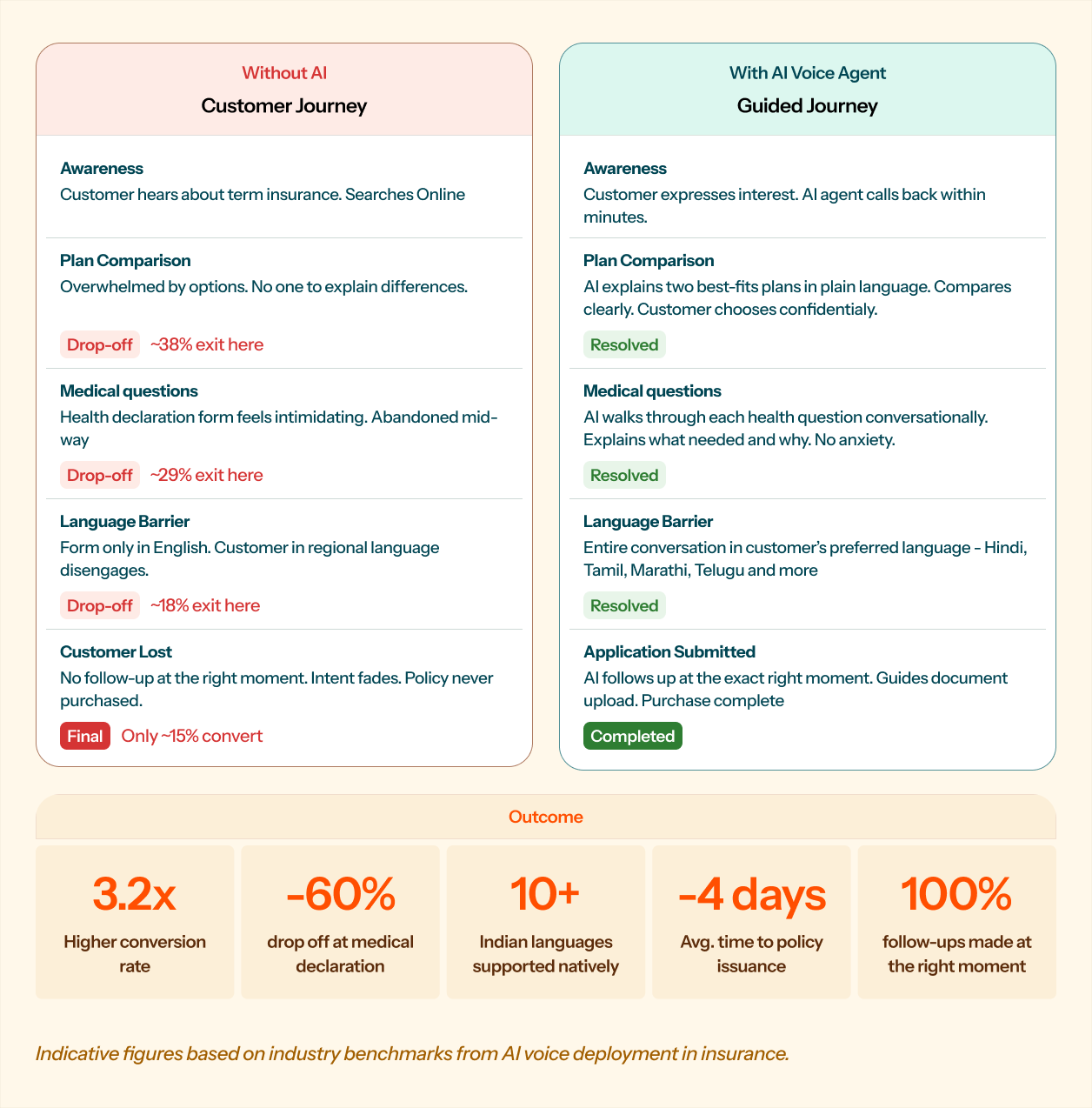
The Business Case Is as Big as the Human One
India's term insurance penetration sits below 3% of GDP. The market that needs this product is enormous. The distribution infrastructure that currently serves it is not.
Insurers who solve the discovery-to-purchase friction problem don't just do the right thing. They capture a market their competitors are failing to reach.
The Bottom Line
The term insurance gap in India is not an awareness problem. It is a friction problem. Customers are willing, the journey is just hard enough that most of them stop.
AI voice agents that guide customers through every friction point, in the right language, at the right moment, are the distribution infrastructure this category has always needed. The insurers who deploy them first will own the market that everyone else is still trying to reach through awareness campaigns.