

Your dashboards look healthy. AHT is improving. Tickets are closing. But customers are still frustrated. Here's why the numbers are lying to you.
The Metrics Problem Most BFSI Teams Don't Notice
Most BFSI enterprises already have dashboards full of customer support data. Every call is tracked. Every interaction is measured. Support teams know exactly how long customers waited, how quickly agents responded, and how many tickets were closed every day.
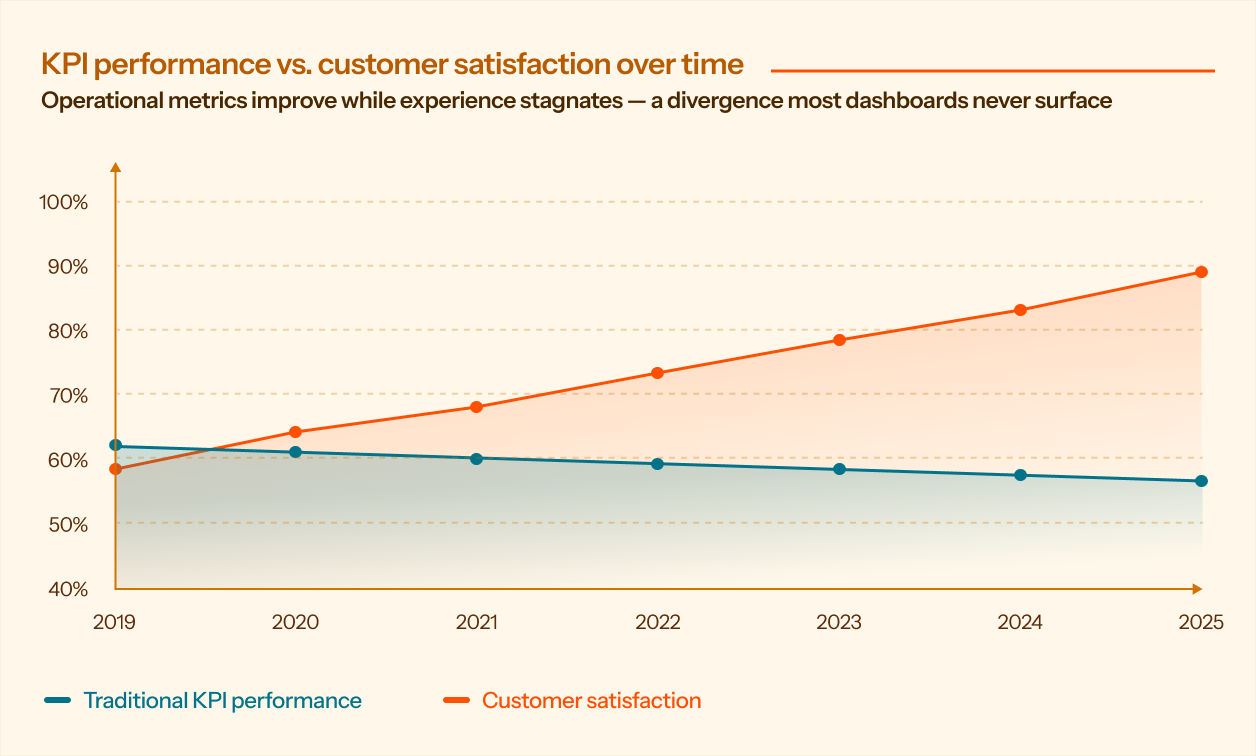
And on paper, everything often looks healthy. Average Handle Time is improving. Call volumes are stable. Resolution numbers appear strong.
Because while traditional call center metrics measure operational efficiency extremely well, they rarely measure how customers actually feel during the interaction. And increasingly, that's becoming the metric that matters most.
The gap between operational KPIs and real experience is where most dashboards fail.
What businesses think matters
What users actually want
Why Customers Still Leave Support Calls Frustrated
Customer expectations have changed dramatically. People no longer compare BFSI support experiences only with other banks or insurers. They compare them with every modern digital experience they interact with daily. They expect conversations to feel smooth, contextual, and immediate.
A customer calling for policy servicing may still go through multiple IVR menus, repeated verification steps, disconnected departments, delayed callbacks, and inconsistent follow-ups.
Operational Efficiency ≠ Customer Experience
A customer ending a call quickly doesn't mean the interaction was successful. Sometimes it means they gave up faster. A ticket marked "resolved" may still leave the customer confused or unsupported.
Operational metrics improve while experience stagnates. That divergence is exactly what most support dashboards never surface.
How Traditional IVRs Created a Broken Customer Journey
"Press 1 for claims. Press 2 for renewals. Press 3 to repeat." For years, this was considered standard customer support. Today, it feels outdated. Traditional IVRs were built around routing calls efficiently, not around understanding conversations.
Traditional IVRs & manual agent support
Support was organized around routing efficiency, queue management, and rigid call flows.
Omnichannel contact centers
More channels were added, but customer context often remained fragmented across systems and teams.
AI-assisted support systems
Enterprises started layering automation into support, but often without redesigning the full customer journey.
Conversational AI & agentic voice systems
Support systems are now expected to understand intent, retain context, and drive resolution, not just route calls.
The Rise of Conversational Intelligence in BFSI
Unlike traditional automation systems, modern conversational AI platforms focus on conversation quality instead of just call completion. That changes how enterprises measure success entirely.
The Metrics BFSI Leaders Will Care About Next
Traditional KPIs will still matter, but they'll no longer be the primary measure of success. Enterprises will increasingly focus on metrics that reflect customer trust, not operational throughput.
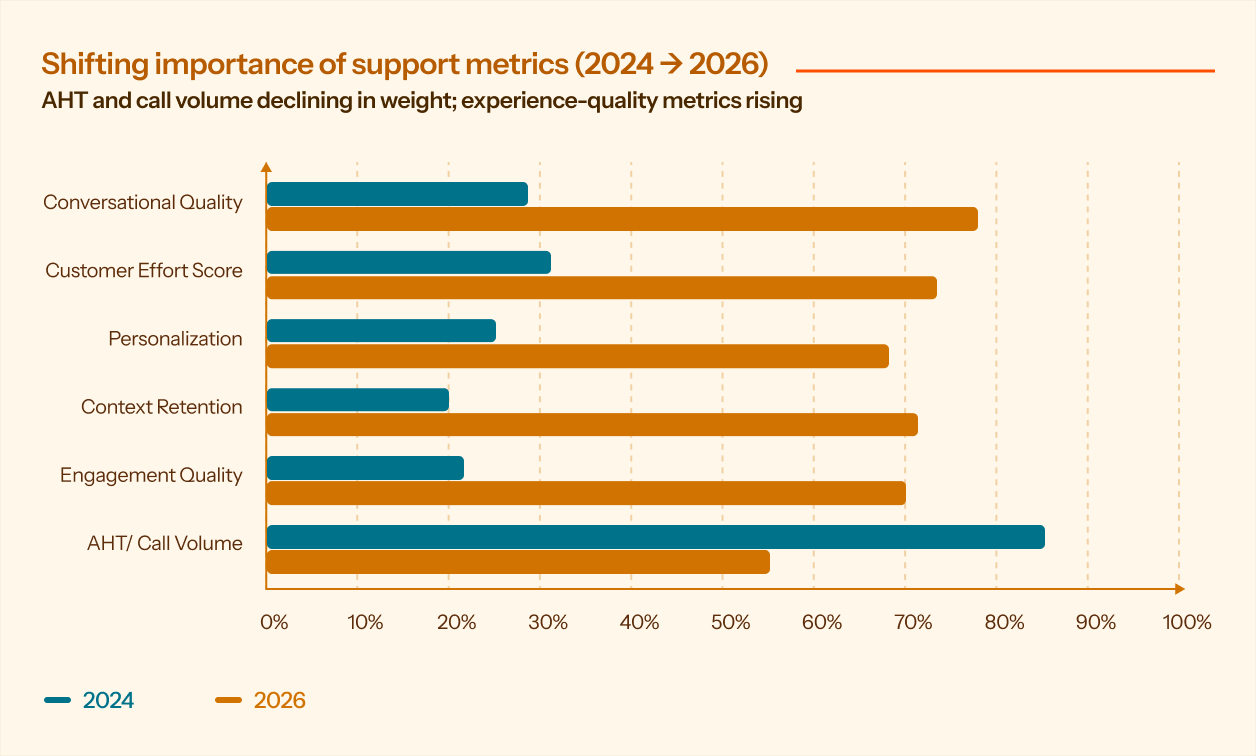
Conversational Resolution Quality
Did the customer genuinely feel helped, not just closed?
Customer Effort Reduction
How easy was the interaction from the customer's perspective?
Context Continuity
Did the system retain memory across all touchpoints?
Meaningful Engagement
Did the customer actively participate and progress?
Follow-Up Reliability
Did the organisation respond consistently and proactively?
The Bottom Line
The future of customer operations will not be defined simply by how many calls an enterprise handles. It will be defined by how effectively it creates meaningful customer conversations at scale.
Traditional metrics helped BFSI enterprises scale support for years, but customer expectations have evolved far beyond operational reporting.